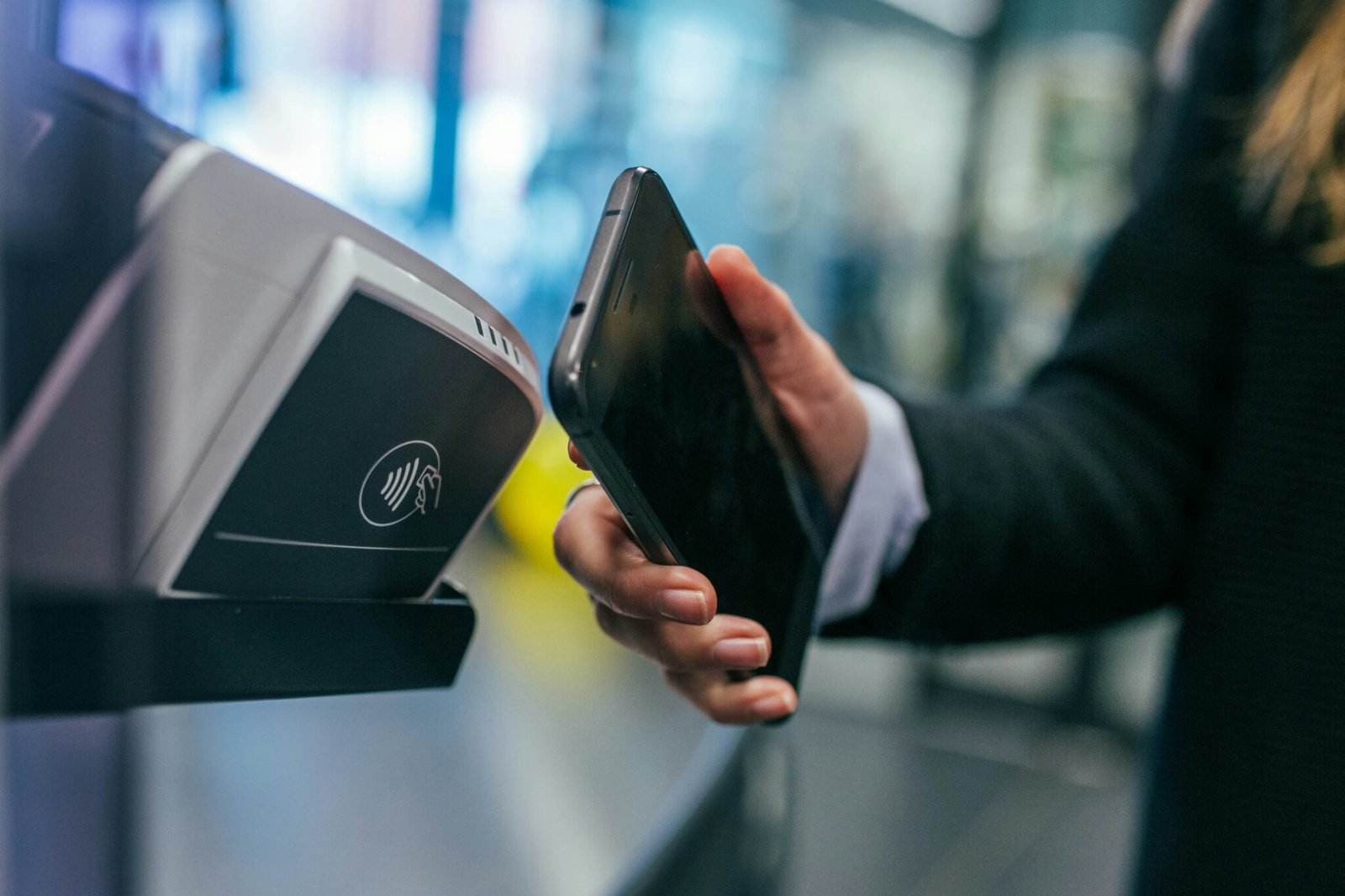
DBS Bank, Southeast Asia’s largest lender, is running a pilot where AI agents pay your bills, split your expenses, and route international transfers before you’ve finished your morning coffee. According to McKinsey’s Global Survey on AI, 78% of organizations now deploy artificial intelligence across business functions—with banking alone investing $21 billion in 2023. The question isn’t whether AI agents payments are coming. It’s whether your bank will be ready when they do.
What AI Agents Payments Actually Do in Banking
AI agents payments aren’t chatbots with a payment button attached. They’re autonomous systems that analyze payment routes, detect fraud patterns, and execute financial transactions without requiring approval on every step. DBS’s pilot integrates with real-time payment infrastructures—UPI, IMPS, RTGS, and NACH—to enable 24/7 settlements across banks. The agents evaluate transaction costs, processing times, network congestion, and user behavior simultaneously to route each payment efficiently.
The practical difference from traditional automation shows up in complexity handling. When you instruct a conventional banking app to split dinner, it transfers a fixed amount to a fixed account. An AI agent in DBS’s system processes the voice command, accesses transaction history, identifies the recipient from your contacts, checks available payment rails, and executes—all within the same interaction. PayPal and Visa already use comparable AI for reconciliation, settlements, and fund transfers on the backend. DBS is bringing that capability to direct customer interactions.
The speed difference versus legacy infrastructure is where the economic case becomes concrete. Traditional SWIFT international transfers take 3-5 business days, involve correspondent banking fees that average 2-3% of transaction value, and require manual compliance review above certain thresholds. AI agents routing through faster payment rails—where available—can compress that timeline to near-instant, at lower cost, with automated compliance checks running in parallel rather than sequentially. JPMorgan’s ISO 20022 implementation demonstrates this in the cross-border context: when the payment messaging standard carries richer data, AI systems can make routing and compliance decisions faster and with fewer manual interventions.
The Technology Stack Behind Autonomous Payments
Three technologies combine to make AI agents payments function at scale. Multimodal AI handles input processing—text commands, voice instructions, and transaction data simultaneously. Tokenized payments provide the security layer: instead of exposing account numbers, the system generates unique tokens per transaction. Visa’s collaboration with OpenAI demonstrates this approach, where AI agents use tokenized credentials for secure checkouts without revealing underlying financial data.
Federated learning handles the privacy problem. According to McKinsey’s research, this approach lets AI agents improve from collective transaction patterns without accessing individual user data—critical for maintaining the trust that financial AI infrastructure requires. The combination means agents can learn what fraudulent behavior looks like across millions of transactions while never seeing any individual customer’s complete financial picture.
The $2 Trillion Economic Case for AI Agents Payments
McKinsey’s research suggests AI could generate $2 trillion in global economic value through efficiency gains alone. For banking specifically, that translates to transaction processing improvements, risk management gains, and customer service cost reductions that compound across every institution that deploys at scale.
The fraud numbers are the most concrete. Financial services faced over 20,000 cyberattacks in 2023, costing the industry $2.5 billion according to McKinsey. AI agents counter this through real-time anomaly detection—analyzing transaction patterns to identify fraud before money moves. Major platforms report 25-40% fraud reduction compared to traditional systems. The mechanism: traditional systems flag transactions based on static rules, producing false positive rates of 15-25%. AI agents using machine learning drop that rate to 5-10% while cutting response time from minutes to milliseconds.
How DBS Bank’s Pilot Works in Practice
DBS’s pilot addresses two distinct problems simultaneously. On the backend, it automates loan underwriting, transaction monitoring, and financial recommendations through generative AI. On the customer-facing side, it evolves basic chatbot interactions into agents capable of generating financial summaries, assisting relationship managers with complex queries, and providing proactive advice based on spending patterns.
The system operates on consent-based permissions—agents act only within boundaries users define. A customer might authorize automatic bill payment but require confirmation for transfers above a certain amount. That consent architecture matters because it’s where liability gets established: DBS maintains protections similar to traditional unauthorized transaction policies, but users need to configure their authentication settings correctly for those protections to apply.
Southeast Asia’s payment infrastructure gives DBS an unusual advantage for this deployment. Singapore’s PayNow, India’s UPI, and Thailand’s PromptPay already support instant transfers. Singapore’s regulatory sandbox allows experimentation with AI-driven financial services while maintaining consumer protections. That combination—advanced infrastructure plus regulatory flexibility—makes the region a more viable testing ground than most Western markets where legacy systems and stricter pre-approval requirements slow deployment.
What DBS has built isn’t a finished product—it’s a production pilot that’s demonstrating what’s technically possible within a real banking environment. The data coming out of that pilot, including transaction success rates, user consent patterns, and fraud detection accuracy, will inform how far and how fast they scale. Other banks in the region are watching those numbers closely. When a pilot at this scale shows consistent results, it tends to accelerate adoption decisions across the competitive set faster than any benchmark or vendor presentation could.
How JPMorgan, Visa, and Shopify Are Competing
JPMorgan focuses its these systems work on reducing false positives in cross-border transactions, using ISO 20022 standards to improve transparency and speed while cutting operational costs. Their approach targets the friction that makes international payments expensive—manual review requirements, compliance checks, correspondent banking delays—rather than the customer-facing interaction layer that DBS is prioritizing.
Visa’s Intelligent Commerce initiative takes a platform approach. Their research shows AI insights into clearing cycles help optimize transfer timing, reducing operational costs across the network. Shopify restricts agentic checkouts to specific partners, maintaining tighter control over the customer experience. Stripe enables broader developer access, letting more teams integrate AI payment capabilities into their own applications.
The competitive dynamic is less about who builds the best AI and more about who controls the payment rails that AI agents connect to. Banks with proprietary infrastructure have inherent advantages. Platforms like Stripe that expose APIs broadly create different network effects—more developers integrating AI payments means more transaction data, which improves the AI, which attracts more developers.
Where AI Agents Payments Fall Short
Only 25% of banks are considered AI-ready according to BCG research, with most institutions still operating in pilot phases. That gap between pilots and production deployment reflects real infrastructure requirements: solid API ecosystems, real-time processing capabilities, and monitoring systems sophisticated enough to catch when AI agents make errors—not just fraud attempts.
Dispute resolution is the hardest unsolved problem. When an AI agent makes an incorrect payment, responsibility sits ambiguously between the user, the bank, and the technology provider. Traditional chargeback processes weren’t designed for autonomous systems, and current regulatory frameworks haven’t caught up to clarify liability. Cross-border compliance adds another layer: AI agents must navigate different financial regulations across jurisdictions, and current systems frequently require manual oversight for international transactions precisely because the regulatory variation is too complex for current AI to handle reliably.
The technology also struggles with decisions that require genuine judgment rather than pattern matching. Routine payments—bills, recurring transfers, splitting known expenses—are well within current capability. Complex financial planning decisions, unusual transaction contexts, or situations where a customer’s circumstances have changed in ways the AI hasn’t registered still benefit from human oversight.
There’s also a concentration risk that rarely gets discussed in the optimistic coverage of this space. When AI agents handle a large share of payment routing across a banking system, a model error or adversarial attack doesn’t affect one customer—it potentially affects millions simultaneously. The same scale that makes AI agents payments economically attractive is what makes their failure modes operationally dangerous.
Accenture’s work on composable banking architectures addresses this through distributed system design, but most banks aren’t there yet. The honest version of the AI agents payments pitch acknowledges that the infrastructure maturity required for safe mass deployment at scale is still being built.
Frequently Asked Questions
How secure are these systems compared to traditional banking?
AI agents payments typically offer stronger fraud detection through real-time behavioral analysis. Major platforms report 25-40% reduction in fraudulent transactions compared to traditional systems, with false positive rates dropping from 15-25% to 5-10%. The security improvement comes from continuous pattern analysis rather than static rule-based detection—but the technology requires proper consent configuration from users to apply those protections correctly.
What happens if an AI agent makes an unauthorized payment?
Banks implementing these systems maintain liability protections similar to traditional unauthorized transaction policies. The key variable is consent configuration: users must ensure their authentication settings and permission boundaries are properly set. Dispute resolution remains a developing area—when an AI agent makes an incorrect payment, determining responsibility between user, bank, and technology provider isn’t always straightforward under current regulatory frameworks.
Will AI agents payments replace human customer service?
these systems handle routine transactions autonomously—bill payment, expense splitting, transfer routing. DBS’s pilot explicitly positions the technology as complementary to human relationship managers rather than replacing them. Complex financial decisions, disputes, and unusual circumstances still route to human oversight. The practical effect is that human attention gets redirected toward higher-complexity interactions rather than eliminated.
Which banks are leading AI agents payments deployment?
DBS Bank leads in Southeast Asia with its active pilot integrating with regional payment rails. JPMorgan focuses on cross-border payment optimization using ISO 20022 standards. Visa’s Intelligent Commerce initiative operates at the network level across multiple institutions. BCG research finds only 25% of banks are AI-ready for full deployment—most institutions remain in pilot or planning phases as of 2024.
How much could these systems cost consumers?
Most banks integrate AI agents payments into existing account packages without additional consumer fees. DBS’s pilot operates within standard account structures. Premium features—advanced analytics, international payment optimization, or higher transaction limits—may carry additional charges depending on the institution. The cost savings from fraud reduction and processing efficiency generally allow banks to absorb basic AI agents functionality into existing service tiers.
What’s the realistic timeline for mainstream adoption?
nCino forecasts agentic AI will dominate high-friction banking workflows by 2025. Accenture positions full mainstream adoption in the 2025-2030 window. The grounded metric is BCG’s finding that only 25% of banks are currently AI-ready—meaning the remaining 75% face infrastructure, regulatory, and talent gaps that don’t close overnight.
Markets with advanced real-time payment rails and regulatory sandbox environments, like Singapore, South Korea, and India, will reach mainstream adoption earlier. US and European markets face longer timelines due to legacy infrastructure complexity. The $21 billion banking AI investment in 2023 suggests the buildout is accelerating—but adoption curves in financial services have historically run slower than technology timelines predict.